Reference Is Evidence: Curating a Swipe File You Could Defend in Public
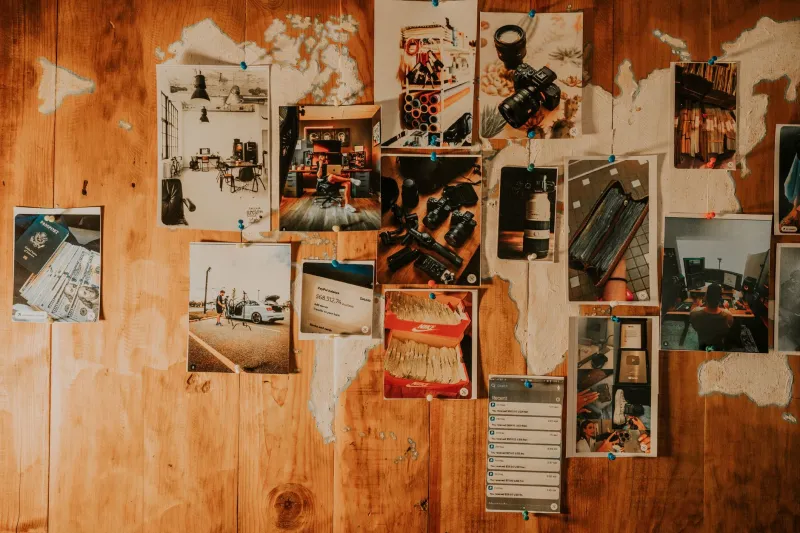
There's a moment in most freelance jobs where the client sends a screenshot and says "something like this." No source, no photographer's name, no context — just a cropped image of an ad, a packaging shot, a website that feels right. You add it to the folder. The folder is now eleven gigabytes of other people's work, and somewhere in there is the thing you'll accidentally half-copy at 11pm on a Thursday.
This isn't a lecture about originality. Design has always been a conversation with what came before. But a reference library is a paper trail, and in the UK it's a paper trail that a client, a competitor or a solicitor could theoretically read. So it's worth building one that holds up.
What UK copyright actually covers
Forget registration. In the UK, copyright in an original artistic work — an illustration, a photograph, a logo, a building, a piece of typography with enough originality — exists automatically the moment it's recorded. The Copyright, Designs and Patents Act 1988 is the statute, and protection generally lasts for the creator's life plus 70 years. Photographs qualify, and so do rough sketches, which surprises people.
There is no general "inspiration" defence. "Fair dealing" in the UK is narrower than American fair use, and it covers specific purposes: criticism and review, quotation, news reporting, parody, caricature and pastiche, plus incidental inclusion. Copying a layout because you liked it in a moodboard isn't on that list. Neither is "we changed the colours."
What copyright protects is expression, not ideas. A moody, grainy photo of a coastal town isn't protected as a concept — but that specific composition, that specific grain treatment, that specific image is. The line between "influenced by" and "substantially similar" is qualitative, not a percentage, which is why nobody can give you a clean number. If in doubt, take advice from a solicitor or from DACS rather than a forum thread.
A swipe file and a moodboard are different objects
A swipe file is for you. It's messy, it's personal, it's full of things you'd never show a client — a typeface you like, a grid that solved a problem, a colour pairing from a book jacket. Mine is mostly packaging from a Turkish grocer near me and screenshots of record sleeves.
A moodboard is a piece of client communication. It makes an argument: this is the territory, this is the tone, this is what we're not doing. Those two jobs need different discipline. The mistake is letting the private folder leak into the pitch deck unedited, so the client reads a gallery of finished work and assumes the job is to reproduce it.
Keep them in separate places. Not separate subfolders — separate tools, or at least separate top-level folders with names you can't confuse at speed. "Swipe (private)" and "Project — reference board v1" is enough.
Annotate the why, not just the image
An image with no note is a trap. Six months later, or three people later, nobody remembers whether the appeal was the paper stock or the photography, and the safest assumption becomes "copy the whole thing."
So write the note at the moment you save it. Four lines, no more:
- What I'm pointing at: the editorial spacing, not the logo.
- Why it works here: it makes a dense product list feel unhurried.
- What we won't take: the colour palette, the typeface, the photographic style.
- Source and status: URL, creator if known, and whether it's licensed, unlicensed, or unknown.
That last line matters more than it sounds. "Unknown" is a legitimate status, but it tells you what not to do with the image later. A useful trick is to put the source in the filename itself — eames-poster_vam-collection_unknown.jpg — so the information travels with the file instead of dying in a browser bookmark.
Log the source or lose it
Pinterest is where attribution goes to die. Images get re-pinned without credit, the original photographer's name vanishes, and the platform's terms put the responsibility for clearing rights on you. It's fine as a visual scratchpad if you're disciplined about following the link back, but it's a poor place to keep a client-facing library.
Better options: Are.na for collections with notes attached, a plain folder plus a spreadsheet if you like being left alone, or Eagle or Raindrop if you want tagging that actually works. Whatever you choose, the test is simple — can you get from the image back to the creator in two clicks? If not, it's not a reference, it's an orphan.
Presenting it so nobody thinks it's a template
Two things do most of the work here: framing and sequencing.
Framing means saying what the board is for, in writing, before anyone scrolls. A line on the first slide — "Reference only. These images indicate direction and tone; no third-party work will be reproduced" — costs nothing and prevents a very specific conversation in week three. If you're pitching, put a version of that line in the deck and in the email.
Sequencing means keeping finished work away from the references. If the board mixes a beloved campaign with your own sketch, the client will compare your sketch to the campaign and ask you to close the gap. Lead with the sketches, or use abstract crops and textures rather than complete pieces. When a client says "can we just do that," you can point back to the note that explains what "that" actually was.
When a reference becomes a copy
Three warning signs. You're rebuilding rather than translating. You've stopped being able to explain the idea without the original image in front of you. Or the client has begun using the reference as a checklist: same crop, same typeface, same colour.
Any of those, stop and re-brief. A useful reset is to describe the reference in words only — "quiet, generous margins, lots of air, one strong photo" — and design from the description. If the work still lands, the reference did its job. If it collapses without the image, it was never a reference; it was a template.
A short checklist
- Separate the private swipe file from anything a client sees.
- Note what you're taking and what you're not, every time.
- Record the source and licence status in the filename or a spreadsheet.
- Put "reference only" language in the deck and the covering email.
- Keep finished work out of the reference section.
- If you can't name the creator, don't put it in front of a client.
None of this kills the pleasure of collecting. It just means the folder stays a working tool rather than something you'd rather not have to explain.